Logistics · Plan before you ride
Ferries, Tolls and Riding Season
The roads are the reason you go. The water, the charges and the calendar decide whether the trip works.
Getting to Scandinavia
From continental Europe you have two broad choices. Ride north through Denmark and cross by bridge into Sweden, or take a ferry directly into Norway or Sweden. The bridges are quick but charge motorcycles; the ferries cost more but deliver you rested and much closer to the fjords. For a western Norway trip, landing in Bergen or Stavanger saves two long riding days compared with entering via Sweden.
On any ferry, motorcycles usually board in a dedicated lane and are lashed down on the vehicle deck. Crews often provide straps, but bring your own soft ties and know how to secure your bike without crushing panniers or fairing. Leave the bike in gear and use the side stand only if the crew asks you to.
Ferry and Toll Table
Operators and rules change. Treat this as an orientation guide and confirm details with the operator or authority before you travel. Prices are deliberately left out.
| Crossing or charge | Type | Region | What riders should know |
|---|---|---|---|
| Kiel–Oslo (Color Line) | Overnight ferry | Germany–Norway | Popular with riders from central Europe. Arrives in Oslo, a long day from the fjords. |
| Hirtshals–Kristiansand (Color Line, Fjord Line) | Day ferry | Denmark–Norway | Short crossing to the south coast. A good start for a route north through Setesdal. |
| Hirtshals–Stavanger / Bergen (Fjord Line) | Overnight ferry | Denmark–western Norway | Lands you on the edge of fjord country. Saves riding days on a western loop. |
| Frederikshavn–Gothenburg (Stena Line) | Day ferry | Denmark–Sweden | Arrives at the southern end of the E45. |
| Great Belt Bridge (Storebælt) | Toll bridge | Denmark | Motorcycles pay a toll at the plaza. |
| Øresund Bridge | Toll bridge | Denmark–Sweden | Motorcycles pay a toll. Have a card ready at the booth. |
| Norwegian toll roads (AutoPASS) | Road tolls | Norway | Motorcycles are generally exempt from road tolls. Ferries are charged separately. |
| Stockholm and Gothenburg congestion tax | Urban charge | Sweden | Motorcycles are exempt. |
| Bodø–Moskenes | Domestic ferry | Northern Norway | Open-sea crossing to Lofoten. Book ahead in summer; can be rough. |
| Linge–Eidsdal | Domestic ferry | Western Norway | Short, frequent hop linking Trollstigen and Geiranger. |
| Gryllefjord–Andenes | Seasonal ferry | Northern Norway | Summer-only link between Senja and Andøya. |
For Norwegian ferries and tolls, the official reference is AutoPASS (opens in new tab). For the Øresund crossing, see Øresundsbron (opens in new tab).
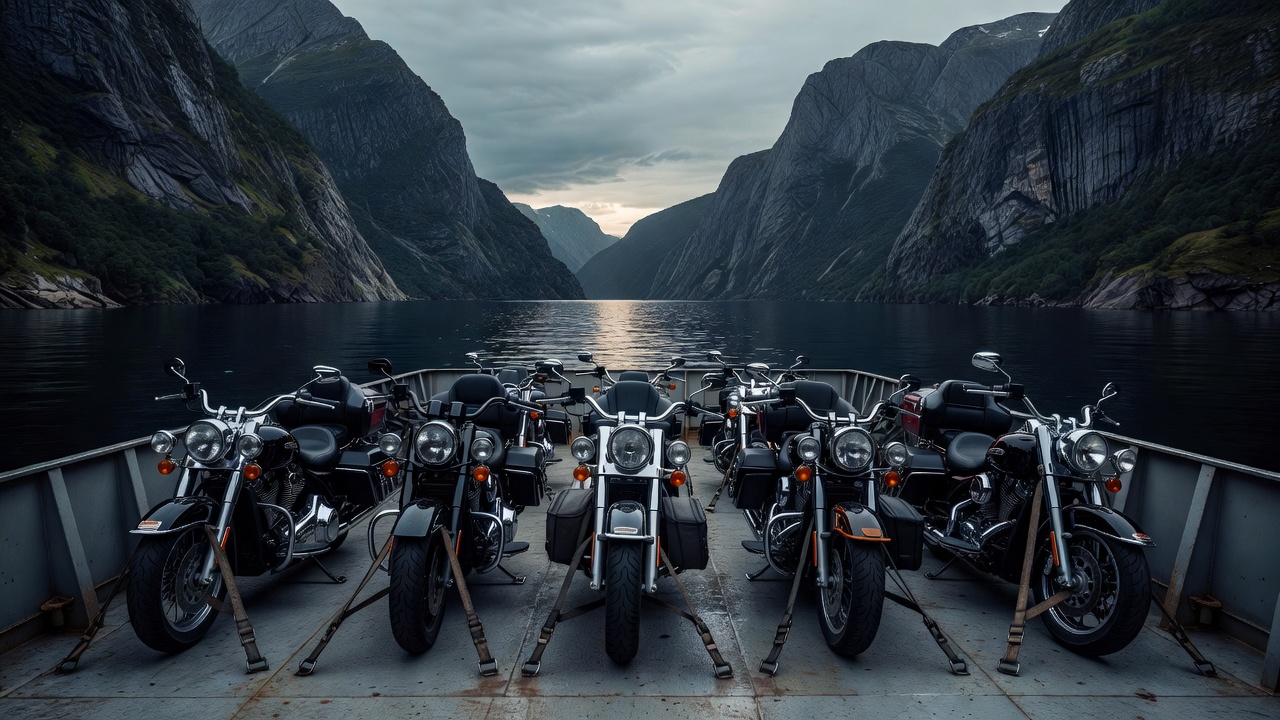
Living With Norwegian Ferries
Inside Norway, short car ferries are part of the road network. Many routes run every twenty to forty minutes in summer, and you simply queue at the quay. Payment is increasingly automatic through number-plate recognition, and foreign-registered vehicles can register with AutoPASS for ferries or receive an invoice. The longer and more remote crossings run less often, and missing the last boat of the day can mean a long detour or a night by the quay.
Build every day around the ferry you cannot afford to miss, then enjoy the ones you can.
Rules of the Road
- Speed: Norway's default limits are 50 km/h in built-up areas and 80 km/h elsewhere, higher only where signed. Fines are among the highest in Europe. Sweden's limits vary by road and are clearly signed.
- Lights: dipped headlights are required at all times in both Norway and Sweden.
- Alcohol: limits are very low, 0.2 per mille in both countries. Do not ride after drinking at all.
- Tunnels: some are long, cold and wet. Never stop inside except in an emergency.
The Right to Roam
Norway's allemannsretten and Sweden's allemansrätten give everyone access to uncultivated land, including the right to camp with a tent away from houses for a short stay. In Norway the common rule of thumb is at least 150 metres from the nearest inhabited house or cabin. Leave no trace, never light fires where it is forbidden and respect local restrictions in heavily visited areas such as Lofoten. Sweden's guidance is published by the Swedish Environmental Protection Agency (opens in new tab).
The Riding Season
- Late MayHigh passes begin opening after snow clearing. Snow walls on Sognefjellet, cold nights, few tourists. Midnight sun starts in Lofoten.
- JuneLong light and quieter roads before the Nordic holidays. Mosquitoes arrive in the north. A strong month for western Norway.
- JulyPeak season. Nordic holidays fill ferries, campsites and viewpoints. Book long crossings ahead.
- AugustStill busy early in the month, quieter later. Darkness returns to the far north, bringing the first chances of seeing the northern lights late in the month.
- SeptemberAutumn colour on the mountains and empty roads. Shorter days, frost in the morning and the first snow on high passes.
- October onwardsMany high mountain roads, including Trollstigen and Sognefjellet, typically close for winter. Coastal roads stay open but conditions turn wintry.
Pass opening and closing dates vary every year. Check Statens vegvesen traffic information (opens in new tab) before you commit to a mountain day.